
My Artistic Journey
Creativity has always shaped my life. Drawing was my first love, long before I imagined turning it into a professional path. Although I couldn’t study art at the time, I chose to teach myself — each drawing becoming a quiet lesson in patience, observation, and growth.
My creative journey began in graphic design and later expanded into professional photography. For five years, I worked as a photographer, including time in a model studio, and submitted my work to international competitions where it received recognition, including a gold medal. That experience deepened my eye for light, composition, and detail — and sparked my continued desire to share my work through art competitions today. Selected results can be found in the Publications & Awards section.
Today, I work with graphite, charcoal, colored pencil, and watercolor, constantly experimenting and allowing my artistic voice to evolve. I am also drawn to handmade processes such as bookbinding and continue exploring new mediums, including oils, acrylics and pastels.
Alongside my artistic practice, I have a background in psychology and currently work as a therapist and job coach. My fascination with human emotion and personal stories quietly informs my art. I am further expanding this connection through studies in Art Therapy, while continuing to grow my independent artistic journey.
Animals have always held a special place in my life. Through portraiture I hope to preserve not only their appearance, but also the connection, personality and memories they leave behind. The memorial portraits I create for grieving pet owners are among the most meaningful commissions I have the privilege to work on.
In addition to my personal work, I create commissioned portraits of animals, landscapes, and people. If you have an idea or a story you would like to see translated into art, I would be honored to bring it to life.

Caring for pencil drawings
A hand-drawn pencil portrait can last for years if cared for properly. Do not hang it in direct sunlight, but in soft, diffused light. Avoid damp areas such as kitchens or bathrooms, as paper deteriorates more quickly there.
Choose a spot at eye level (around 1.80 m) for an elegant gallery-style presentation. Or place it with a mirror on a console table, on a stand, or on a shelf or sideboard. This will not only preserve your portrait, but also show it off to its best advantage.

Framing
Framing and protection
When framing a portrait, I recommend having it done by a professional framer. Glass can be fragile during shipping, and even with careful packaging, there is a risk of damage. A professional not only offers a safer finish, but also a wide choice of styles and materials that enhance the quality of your artwork. This ensures that your portrait will remain in excellent condition for years to come, and that the frame will perfectly match your interior and personal taste.
A popular method is passé-partout framing. This involves placing a cardboard border (passé-partout) under the glass so that the drawing does not touch the glass. This prevents the artwork from sticking and protects it from dust, condensation, and stains. The passé-partout also enhances the visual appeal and adds extra depth to the portrait, while serving as a protective layer.
Together with a high-quality frame, this is the best way to not only present your portrait in style, but also to protect it for the long term.

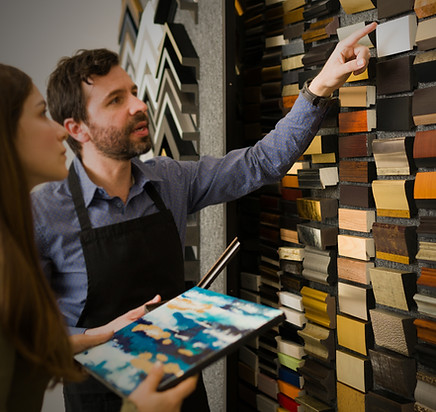
Tips for buying a frame!
Here are some helpful pointers to keep in mind when selecting a frame for your new pencil drawing portrait.
-
Choose beech (light) wood for a modern look
-
Opt for antique gold or darker wood for a classic feel
-
A simple black frame is perfect for graphite pencil drawings
-
Match the frame or the passé-partout to a dominant color in the colored pencil artwork
-
Consider the overall aesthetic when selecting a frame
